
Start the San Jose Residents Directory
Start with one clear question. A street address points toward the Santa Clara County Assessor and the county parcel viewer. San Jose permit records also fit. A person's name may belong in a court index, a professional license roster, or a business filing. A historical city directory may hold it instead. A former occupant who has died can open an obituary or a probate file. Match the clue to the office that holds it. The California Secretary of State's My Voter Status tool only works for the voter themselves. No stranger can search it for others. A San Jose residents directory workflow works best when those boundaries stay in plain view. Resist forcing them into one search box.
Each record proves a different kind of link. A deed names parties to a transfer. A permit names applicants or contractors on a job. A city directory lists only the people who appeared in that printed edition. No single document shows every household member at an address. Keep each question small. Write down the date of every result. Save the original source link alongside your note.
- Use an exact address or APN to identify the parcel and jurisdiction.
- Use the court, vital, license, business, or unclaimed-property source that matches the name clue.
- Move from a parcel to a deed only after confirming the legal description.
- Use city directories, newspapers, census schedules, and maps for earlier households.
- Ask the record custodian for a copy or a bounded CPRA search when the online index ends.
Offices Behind San Jose Resident Records
San Jose is an incorporated city and also the seat of Santa Clara County. That split shapes every lookup. City hall holds permits, code cases, and administrative records. The county Clerk-Recorder keeps recorded instruments and local vital services. The Assessor ties a situs address to an APN and parcel facts. It suppresses assessee names in public results. The courts, state election system, library, and archives add trails of their own.
Santa Clara County Clerk-Recorder
110 W. Tasman Drive, First Floor
San Jose, CA
408-299-5688
California Elections Lookup
Statewide voter status portal
California Secretary of State
800-345-VOTE
San Jose Address Records to APNs
A current address trail begins with the situs address, the physical spot where the parcel sits. Enter a plain address into the Santa Clara County Real Property Search, or use the advanced fields when a street carries a direction or unit. APN search works too. Accept the terms checkbox first. The result can return an APN, situs, assessed land and improvement values, a tax-rate area, and additional parcel facts. It locates property, not people.
The APN is the bridge between systems. Drop it into the Santa Clara County Interactive Map Viewer or the county parcel data page. Confirm the jurisdiction and legal parcel shape before chasing a deed, permit, or neighboring polygon. County GIS excels at discovery and export. The county itself warns to check it against primary records, so treat it as a lead rather than proof. That screen anchors any San Jose residents directory address trail.
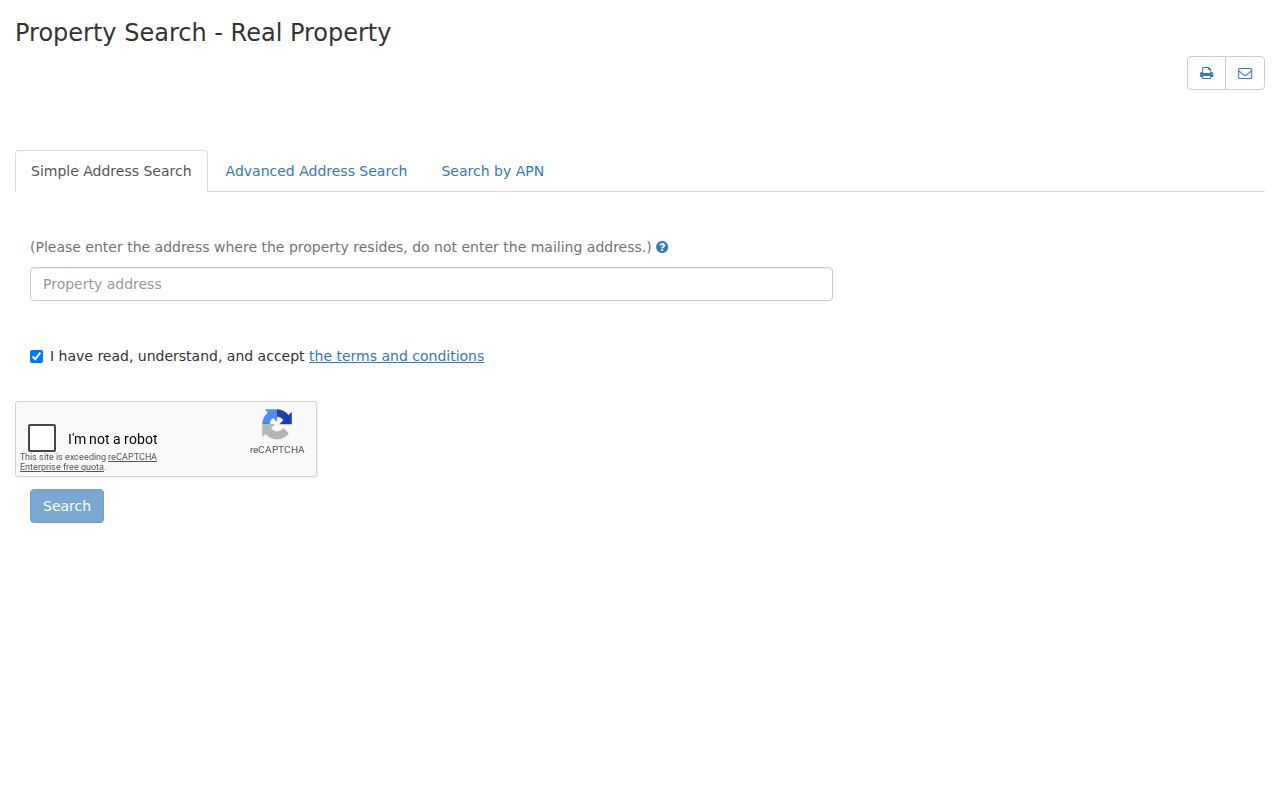
The parcel result supplies a stable identifier for whatever source comes next. The public name field stays hidden.
| Assessor mode | Useful input | What it can return |
|---|---|---|
| Simple address | Property address | Situs, APN, assessed facts |
| Advanced address | Number, direction, street, type, city, unit | More control over a hard-to-match situs |
| APN search | Eight digits or hyphenated APN | Parcel record and map links |
Why Assessor Names Stay Offline
Santa Clara County hides the assessee name in its online assessment results. Government Code §7928.205, which used to be §6254.21, requires the office to suppress owner names from Internet display, so there is no casual owner-name search to fall back on. A blank name field means only that the county withheld it. It does not mean the parcel has no owner.
- Situs address
- The physical location of the taxable parcel.
- Mailing address
- Where an assessment notice is sent. It can differ from the situs.
- APN
- The assessor's parcel number that links map, roll, and deed research.
- Assessee
- The person or entity named in the assessment record, not a complete list of occupants.
Lawful ownership questions still have a path. Inspect the public assessment roll through the Assessor's office. Then pull the current title-changing instrument at the Clerk-Recorder. A homeowners' exemption can signal an owner-claimed principal residence. It never lists everyone inside the home, though. Ownership, mailing address, and occupancy are three different facts. The records treat them that way.
San Jose Deeds and Parcel Records
The Clerk-Recorder index sorts entries by document number, date, type, class, grantor, and grantee. Street-address searching is not its main purpose. Trace the lawful roll or the Recorder first. Let it lead you to a current vesting deed or document number. Then read the legal description and note the transfer date. The seller becomes the earlier grantee to test next.
Walk the chain backward by date and document type. Check the APN, subdivision, parcel description, trust or spouse names, and chronology at every link. Instruments before May 1, 1995 may sit at a book-and-page reference. Later ones carry a recorder serial, document, or instrument number. The office holds 1850-1980 Digital Reel material and 1981-present public workstations. So the chain does not end just because the Internet does.
A deed copy documents a transfer. It cannot prove the grantee lived there. A deed party may be a trust, estate, or organization. For copies, the Recorder's copy instructions lay out the request and delivery routes.
Current San Jose Resident Directory Sources
No single source lists everyone living in San Jose today. Every record set carries a narrower meaning and its own access rule. The table keeps those meanings separate. A parcel fact never gets mistaken for a household list. A self-service voter result, likewise, is not a public search of your neighbors.
| Source | Shows | Keeper | Access boundary |
|---|---|---|---|
| Assessment roll | Parcel and value facts | Santa Clara Assessor | Online owner name suppressed |
| Voter status | One voter's registration status | California Secretary of State | Self-authentication |
| Recorded index | Parties to deeds, liens, and releases | Clerk-Recorder | Workstation or request |
| City staff directory | Official public roles | City of San Jose | Work contact, not home |
| Association map | Civic group contacts | San Jose neighborhood services | Not a member roster |
The clue type decides the tool. Use a San Jose resident lookup when the lead is a person. Use the San Jose street directory when the lead is an address, since the two questions call for different records.
San Jose Court Records Need Proof
Santa Clara Superior Court offers a Case Information Online portal. Civil, small claims, probate, some family, traffic, local-ordinance, and criminal matters appear there. A typical result shows a case number, title, filing date, type, and status. Named parties, hearings, and register-of-actions entries appear too. Search by party name or case number where allowed. Then compare case type, dates, party role, and a second identifier before trusting any match. Use the portal as a starting point only. Most filed documents stay offline. The Hall of Justice at 190 W. Hedding Street and the court's Records Department provide terminal, in-person, or mail fallbacks. A copy request needs the case number, full party names, document title, and filing date. Criminal cases before 2004 can be missing from the online index. Older family cases require the Records Department. Federal matters belong in PACER before a possible move to NARA San Francisco.
| Online case summary | Terminal or copy request |
|---|---|
| Usually free to inspect when available | Copy and certification fees can apply |
| Case number, parties, dates, events, status | Filed papers and certified pages when available |
| Fast name-and-case orientation | Custodian-level document evidence |
Santa Clara's court information portal is a useful index with real limits, so a second record stays essential.
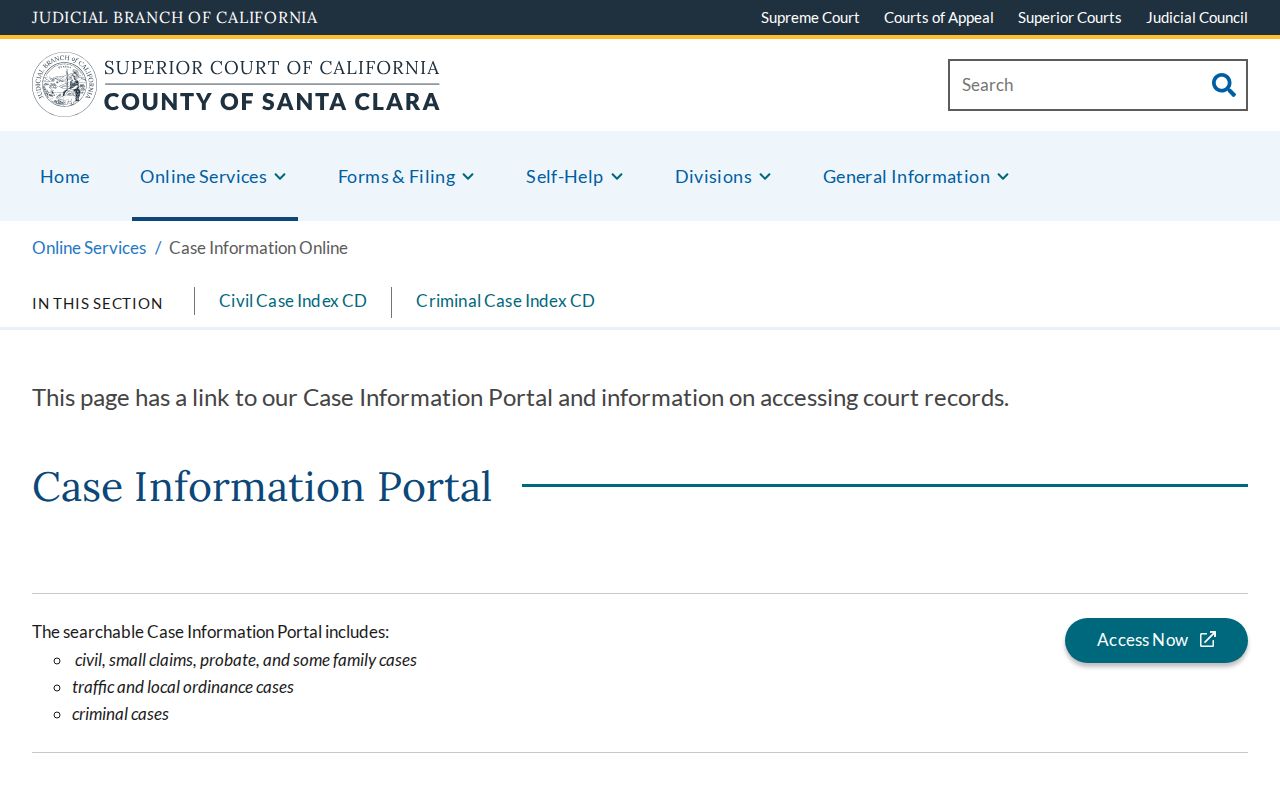
Use the case summary to locate the file, not to make a name-only identification.
San Jose Vital Records Have Two Paths
No single open search covers these records. Birth, death, public-marriage, confidential-marriage, and divorce records each take a separate route. Santa Clara County keeps locally held events with the Clerk-Recorder and Public Health. California Department of Public Health Vital Records holds statewide birth records since July 1905. It also sets the statewide fee schedules. Two copy types exist. An informational certified copy is available under broader rules. It is marked not valid to establish identity. An authorized copy needs an eligible requester. For mail, add a notarized sworn statement under Health and Safety Code §§103526-103526.5.
| Record | Useful custodian | Key limit |
|---|---|---|
| Birth or death | County or CDPH Vital Records | Authorized and informational routes differ |
| Public marriage | Santa Clara Recorder or CDPH | License county matters |
| Confidential marriage | Santa Clara County Clerk | Party or court order only |
| Divorce | Santa Clara Superior Court | Decree and CDPH certificate are different |
Fees differ by office. In 2026 the county lists $34 for a birth certificate. It lists $26 for death and $19 for marriage. CDPH lists $31 for birth, $26 for death, $19 for marriage, and $18 for dissolution. A no-record search can keep its fee. Check the live California vital-record application route before mailing a request.
The California Voter Portal Is Personal
My Voter Status asks for first name, last name, date of birth, and an identity match. The match can be a California driver license or the last four digits of a Social Security number where held. It returns the authenticated voter's status, county, party preference, election information, and ballot details. That design serves one purpose. A person can check their own registration, not enumerate a San Jose street. Elections Code §§2180-2194 limits voter-file use and disclosure. Qualified applicants may request certain files for approved election, academic, journalistic, political, governmental, legal, or investigation purposes, with security promises and certification. Unauthorized sale, marketing, harassment, and online display are prohibited. Participation history shows date and method, not ballot choice. Treat The California voter-status screen as a self-service check.
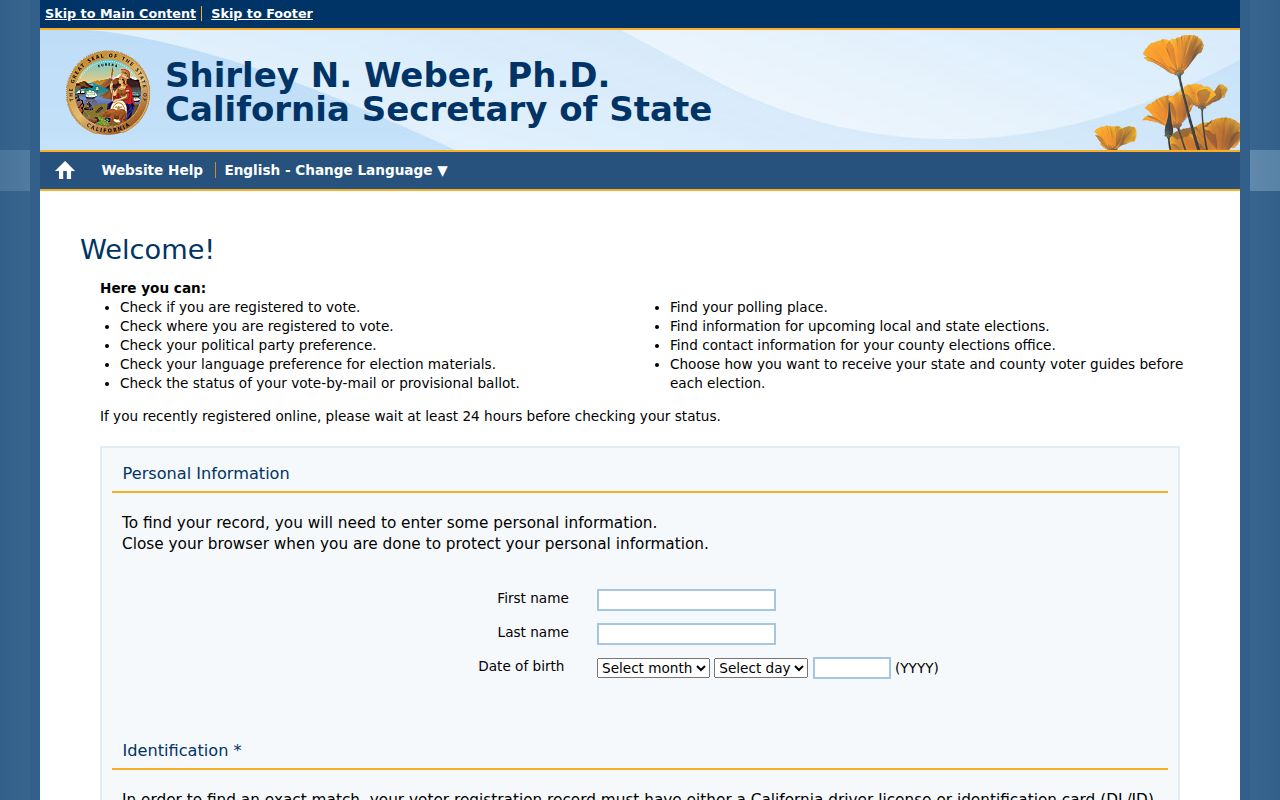
Never turn a private voter result into a block list.
San Jose Business Record Trails
A name linked to a business needs a business record, not an assumption about a home. California Secretary of State bizfile can show an entity's legal name, number, status, jurisdiction, agent, and filed addresses. Santa Clara fictitious business name records can identify a DBA registrant and the filing term. The Department of Consumer Affairs runs California's license search. It checks board, license type, number, personal or business name, and location. These sources establish an affiliation or professional status. License evidence has limits. Medical, nursing, legal, contractor, real-estate, and other board records may show status, expiration, discipline, or office contact. A business tax account proves a city obligation. None proves residential occupancy. Match the entity or license number. Then verify the address with a separate primary source.
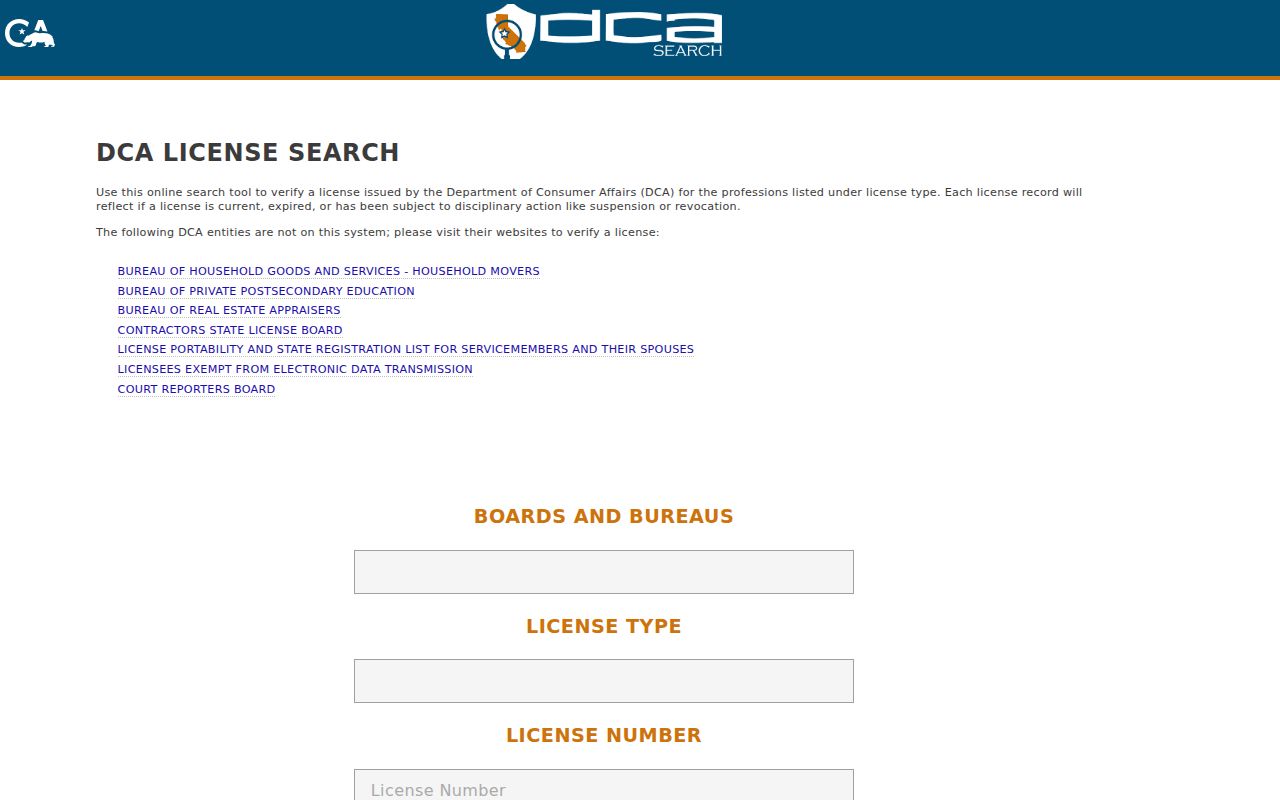
Its result describes a regulated credential or office record, not a complete resident entry. California bizfile supplies the entity side of the comparison.
Label a business address an affiliation until a residence source answers.
Historical San Jose Resident Directories
The California Room at Dr. Martin Luther King Jr. Library holds the main historical shelf. Its San Jose collection spans published directories from 1870 to 1970. Print reaches 1979 and microfilm reaches 1960. Complete digitized volumes cover 1870, 1887, and 1920, plus business sections for 1870-1918. Haines Criss-Cross and Pacific Bell reverse directories begin in the mid-1960s and carry address-first research beyond the city-directory run. Older entries can supply a surname, given name or initial, spouse, occupation, and residence. Symbols matter too. An h means house, while r means rooms or residence. Before 1911, property owners were listed. From 1911, spouses and children over 18 could appear. A 1913 street index flips the search from name to number. Use the volume's own key. Never treat a directory as a deed. The historical San Jose city directory page carries the year-by-year shelf and reading method.
San Jose Historical Directory Shelf
The California Room gateway opens the door to San Jose's deepest historic resident material. The reading room sits on the fifth floor of the King Library at 150 E. San Fernando Street. It blends San Jose Public Library holdings with San Jose State University resources. Nothing circulates. Maps from the 1860s through the 1980s sit nearby. Photographs, yearbooks, and city directories line the shelves with them. Aerials, permits, genealogy databases, and newspaper microfilm round out the range. Hours were listed as Monday 1-6, Tuesday through Friday 11-6, Saturday 1-6, and Sunday closed. Confirm times before you travel.
The on-site index sorts entries by Subject, Title, Author, Location, Call Number, and Source. Location points to a physical file or a vault item. Fragile or uncataloged pieces may require staff handling or an appointment. For newspapers, NewsBank's San Jose Mercury archive delivers full-page scans. The coverage runs from 1884 through 2024. Obituaries, classifieds, and advertisements are included. A year plus an address is the best opening pair. Staff can then steer you toward the right shelf or index.
San Jose Postal Records and City Limits
A San Jose mailing label answers one question: where the mail goes. It rarely answers a second one. Where does municipal jurisdiction actually fall? The official ZIP layer cuts through 95002, 95008, 95013, 95032, 95037, and 95192 in ways that frustrate a simple city search. ZIP 95140 reaches Mount Hamilton county territory and falls outside the San Jose city-limit layer. County islands and edge parcels make a postal label a shaky stand-in for GIS.
Split the task by office instead. USPS settles the delivery ZIP. San Jose planning or county GIS settles jurisdiction, the Assessor settles APN and situs, and the Recorder settles title. Neighborhood names are cultural or planning labels, never legal boundaries. A San Jose ZIP code directory can group the edge cases cleanly. It just cannot turn them into resident counts.
Protecting San Jose Resident Records
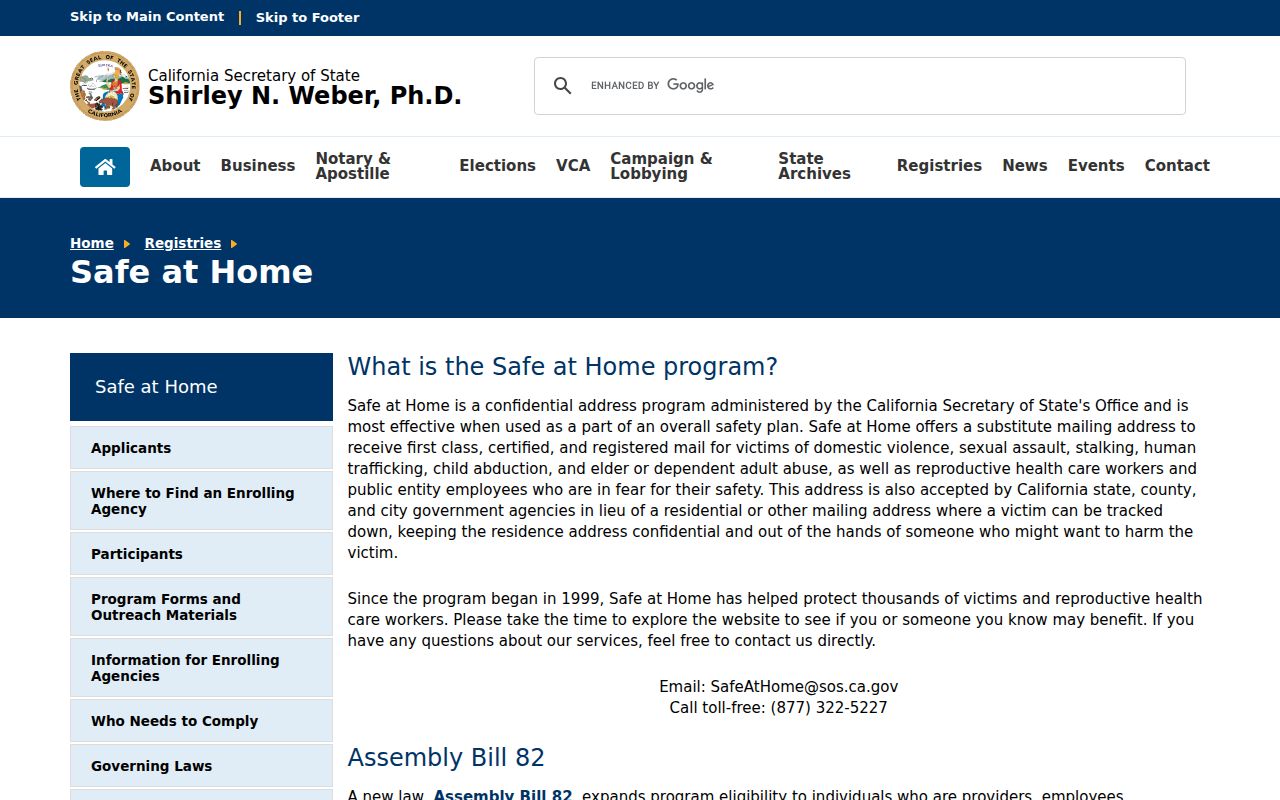
California's Safe at Home program, set out in Government Code §§6205-6216, offers qualifying survivors and other covered participants a substitute mailing address. It also provides mail forwarding. Enrollment is confidential. Participants can also register to vote without exposing a home address. Yet property bought in a person's own name still creates a public legal description. Address confidentiality does not erase every record. The Assessor adds another layer. It applies Government Code §7928.205 to keep specified home addresses and phone numbers off the Internet.
The CCPA and CPRA govern covered businesses. They do not touch deeds, court files, or other government records a custodian must retain. For any correction or deletion, go to the office or business holding that specific record. Give only the verification it needs and save the response. One caution: never send identity documents to an unverified domain. California Safe at Home information explains the protected-mail route.
Confidentiality rules belong in the search plan before any address is copied or shared.
Verify a San Jose Resident Match
A striking name match proves little on its own. Two independent facts beat one. Check an APN or legal description, a spouse or prior surname, or an occupation. An entity number, a court role, or a dated address works too. Keep the exact spelling from your starting record, initials and diacritics included. California's 2025 AB 64 opens a route for diacritical marks on vital records starting in 2026. Older directories often flattened those marks. Search both spellings and note which source supplied each one.
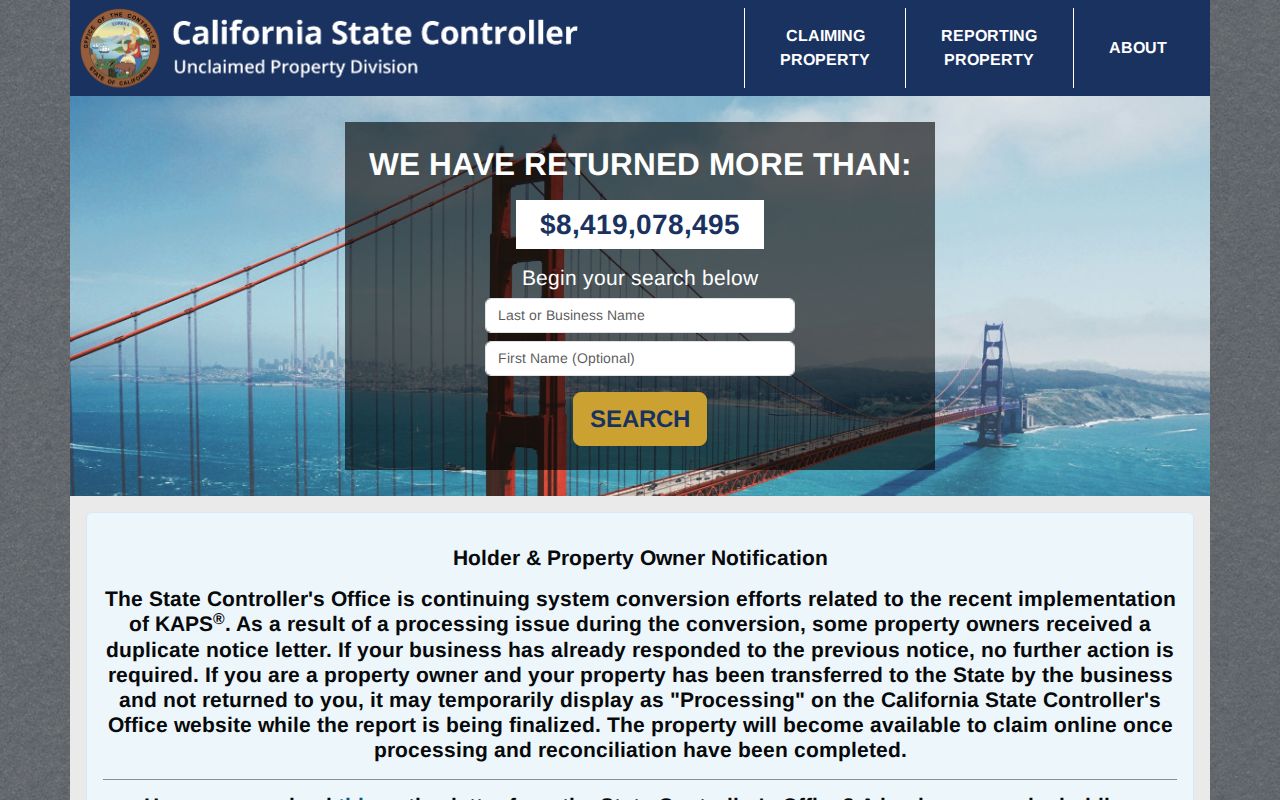
The State Controller's unclaimed-property search can surface a historic name or address clue. That search is free. A match there still does not prove current residence.
Pair that clue with something sturdier. An obituary works, or a business filing. A license, a permit, a court entry, or a deed can serve just as well. Then ask the custodian for the record itself or a certified copy. San Jose's official-records page shows how to frame a CPRA request. Name the existing record, the date range, the department, and your search clue.
Lawful personal use. Public records support genealogy, reconnection, property history, civic research, and scam avoidance. Do not use an address or name trail to stalk, harass, threaten, or harm anyone. Verify with the custodian before relying on a record.